MUSALLA OF BELONGING
MUSALLA OF BELONGING
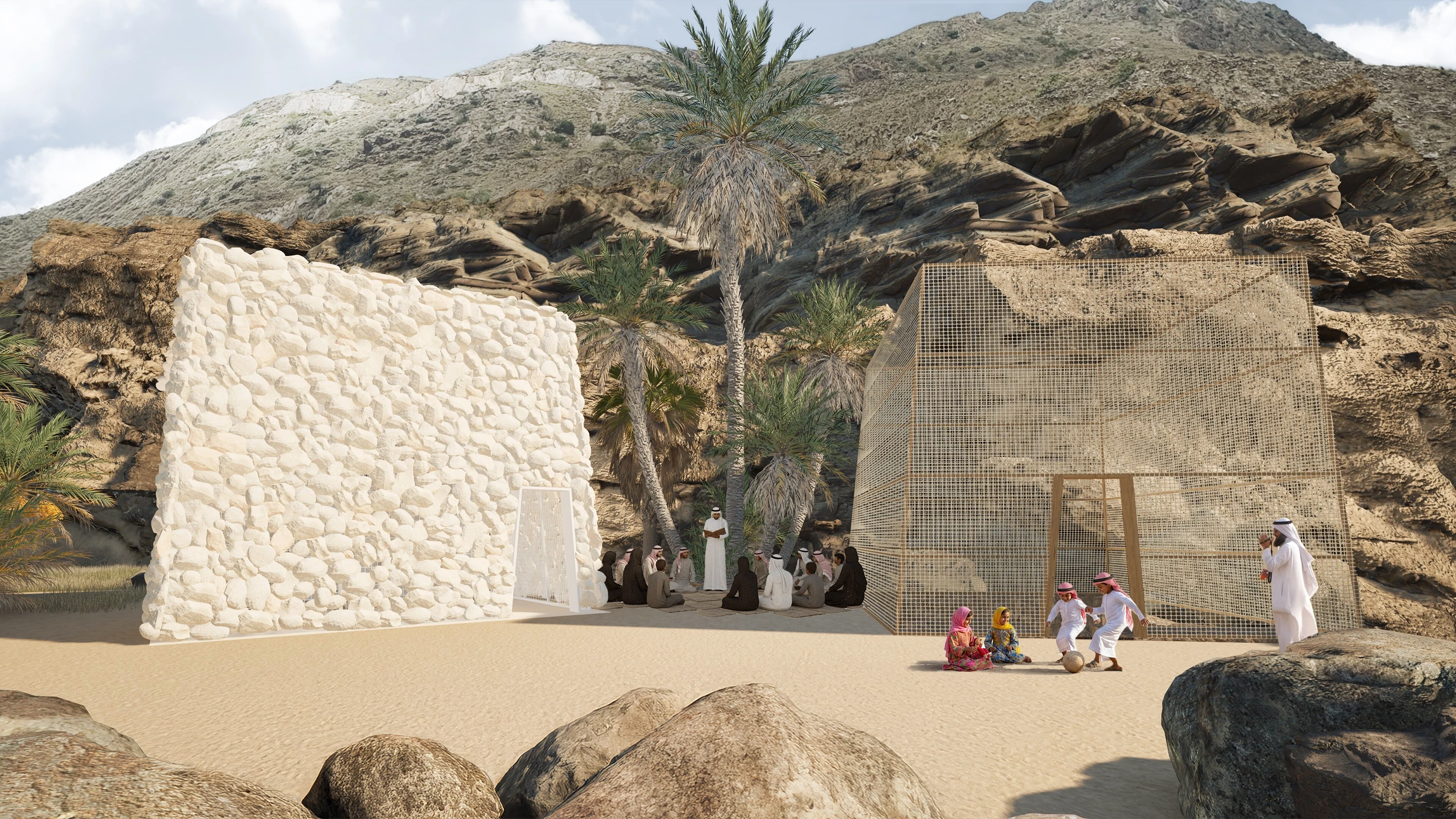
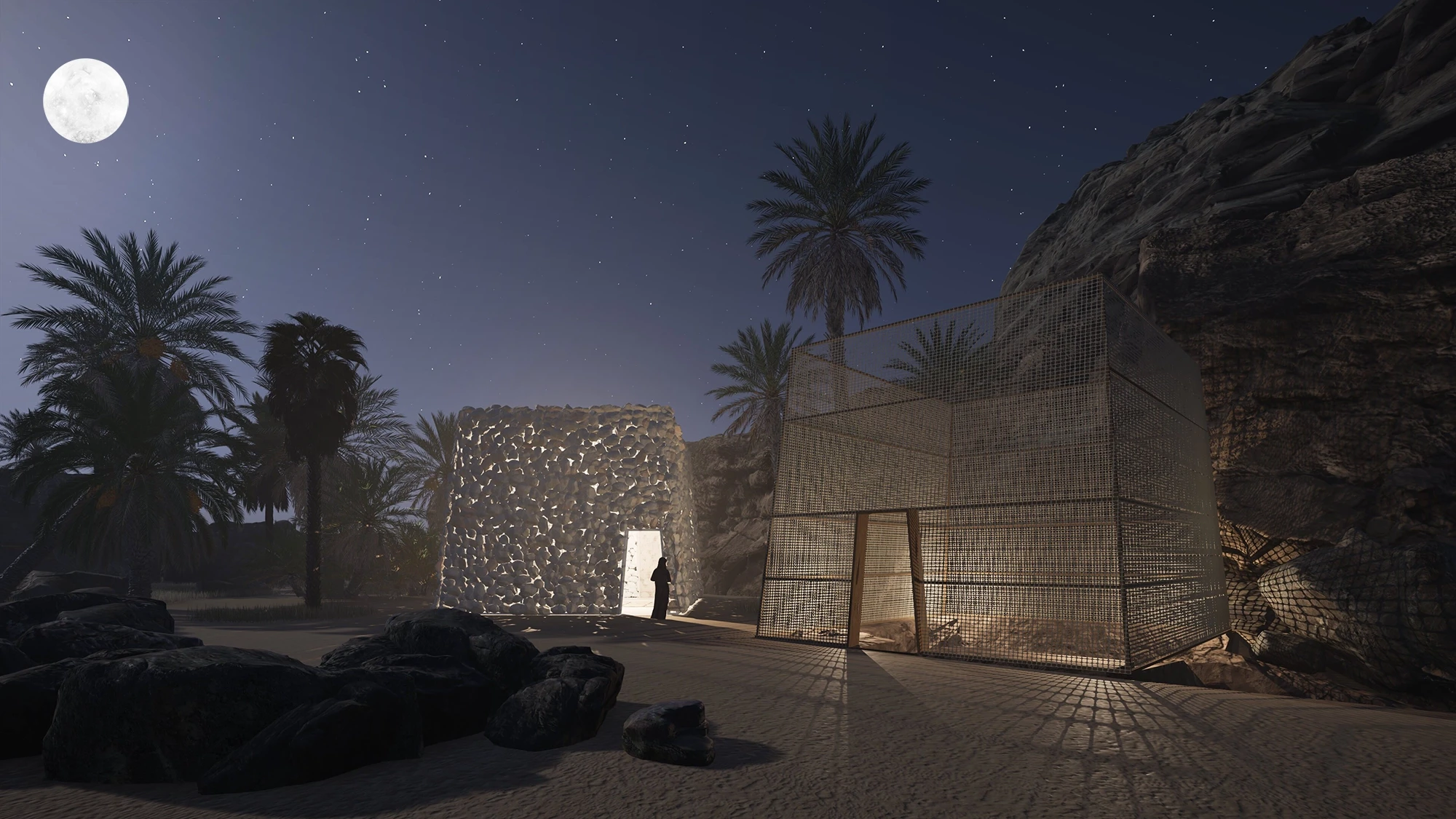
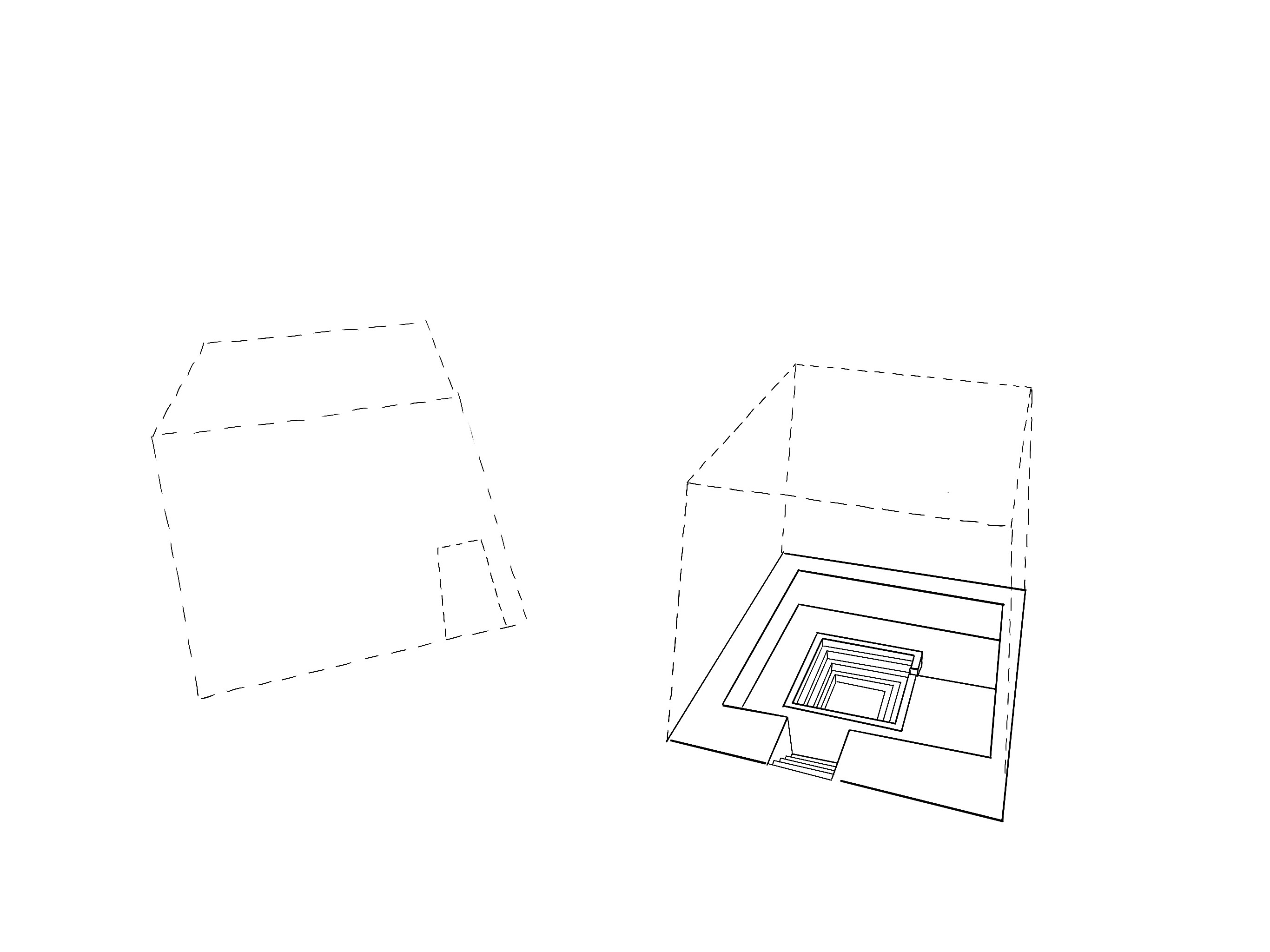
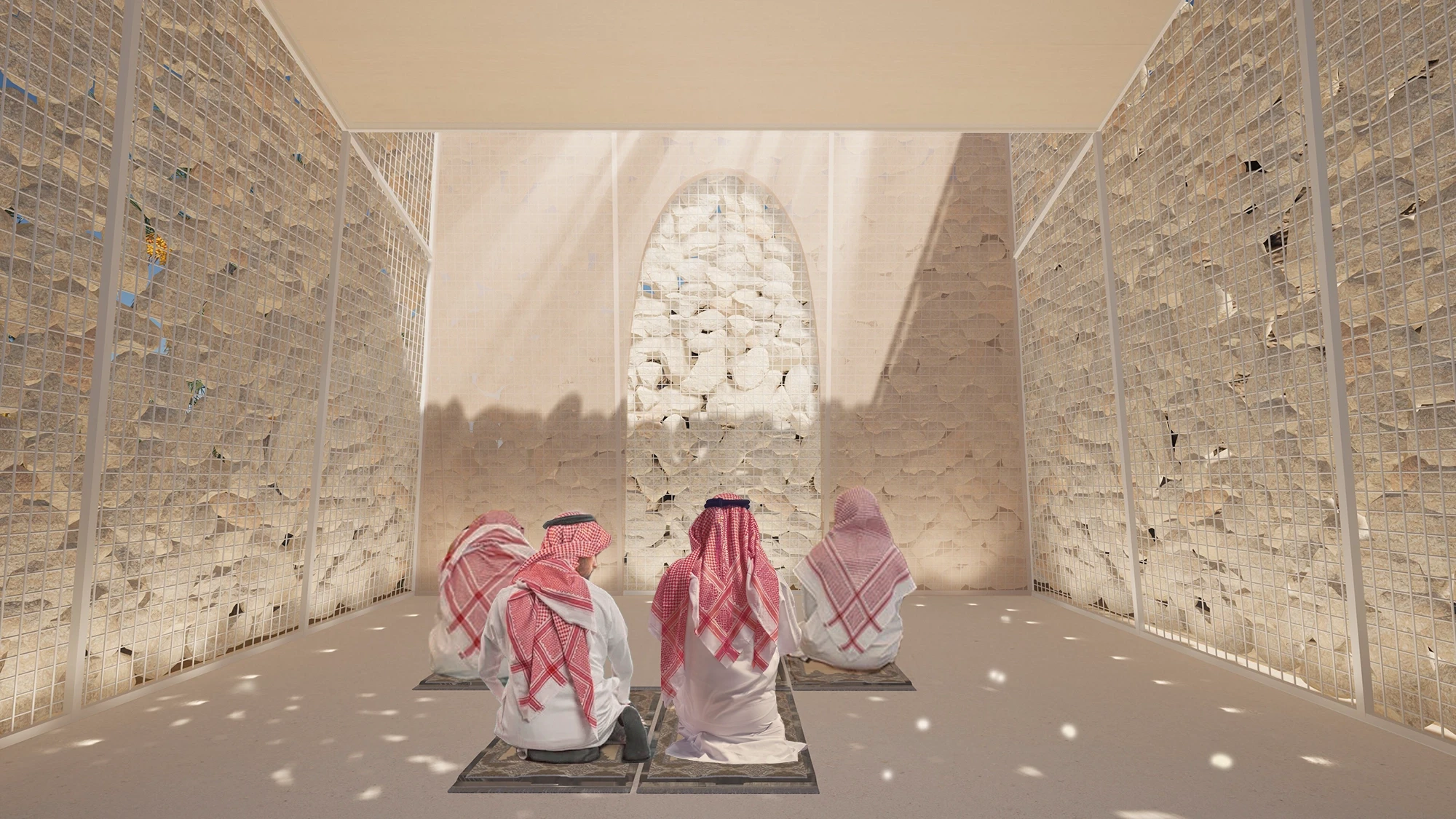
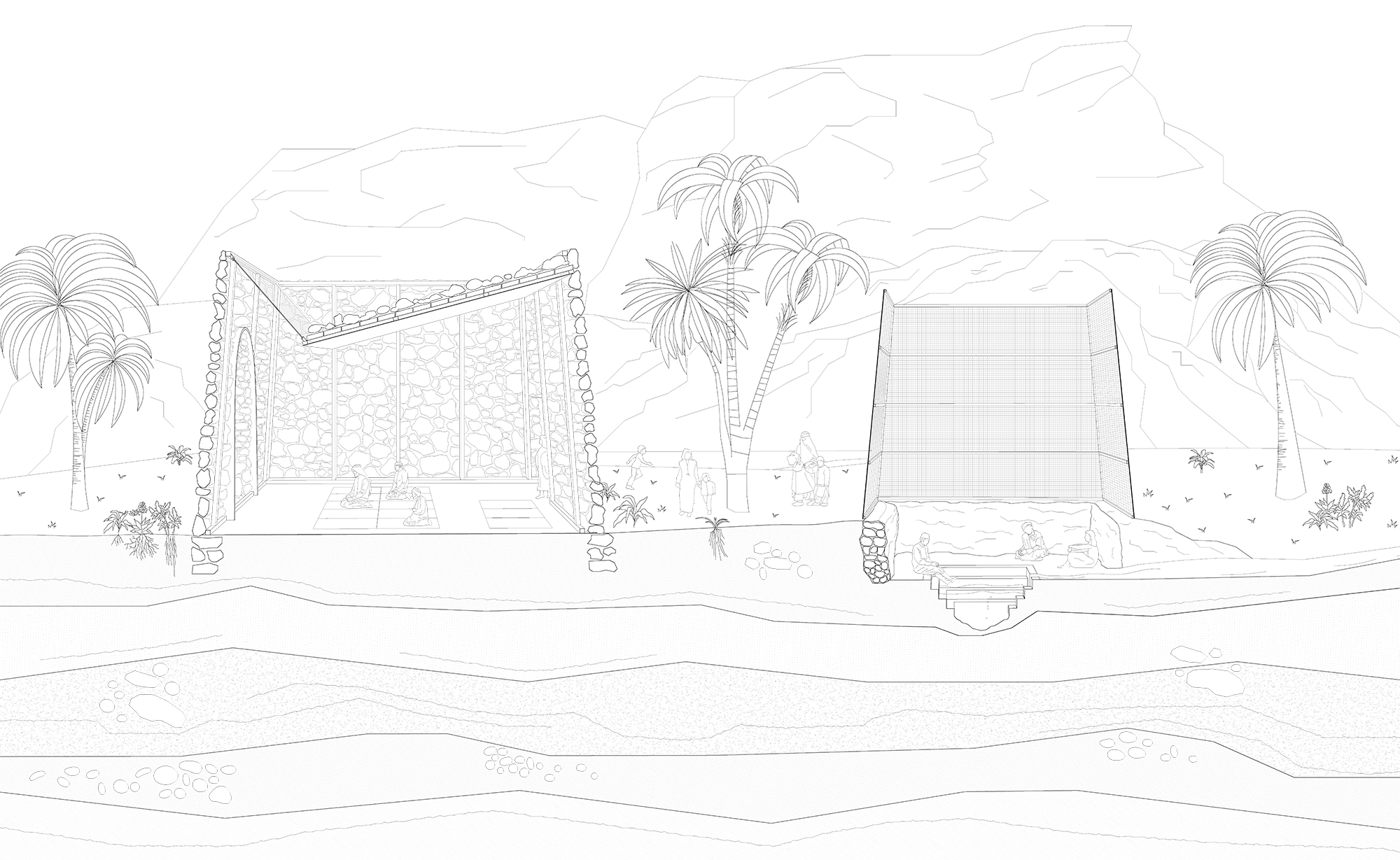
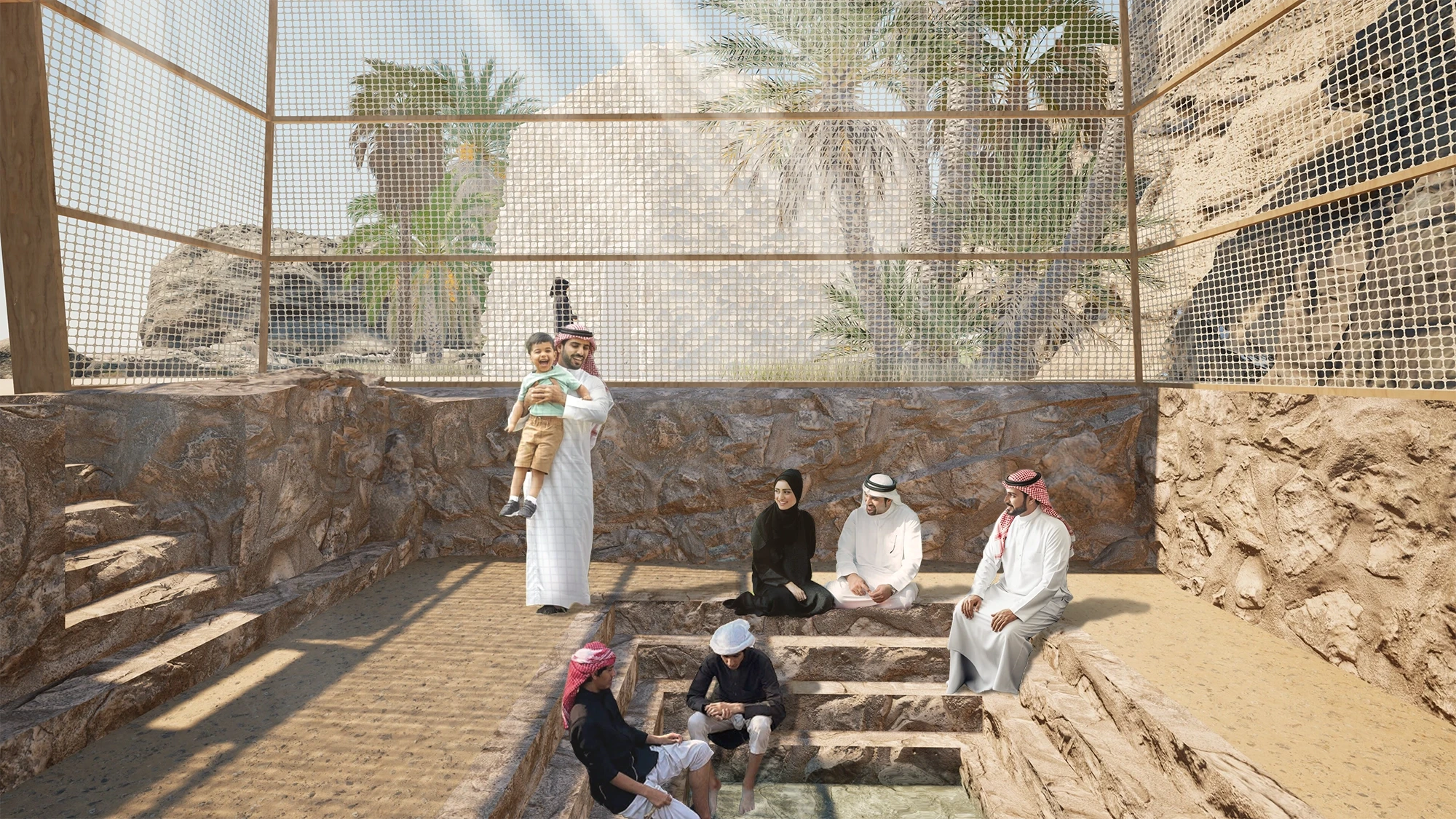
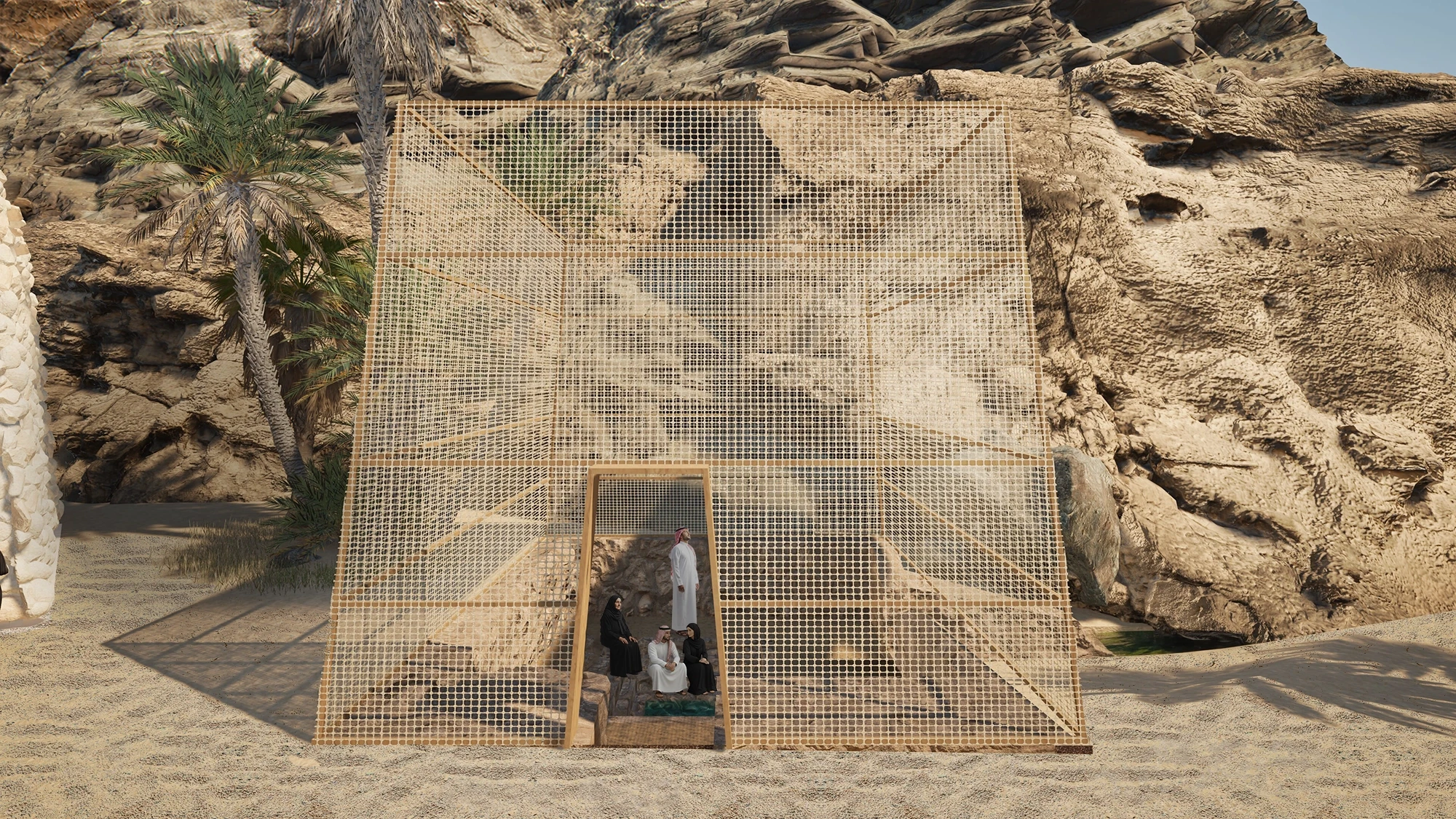
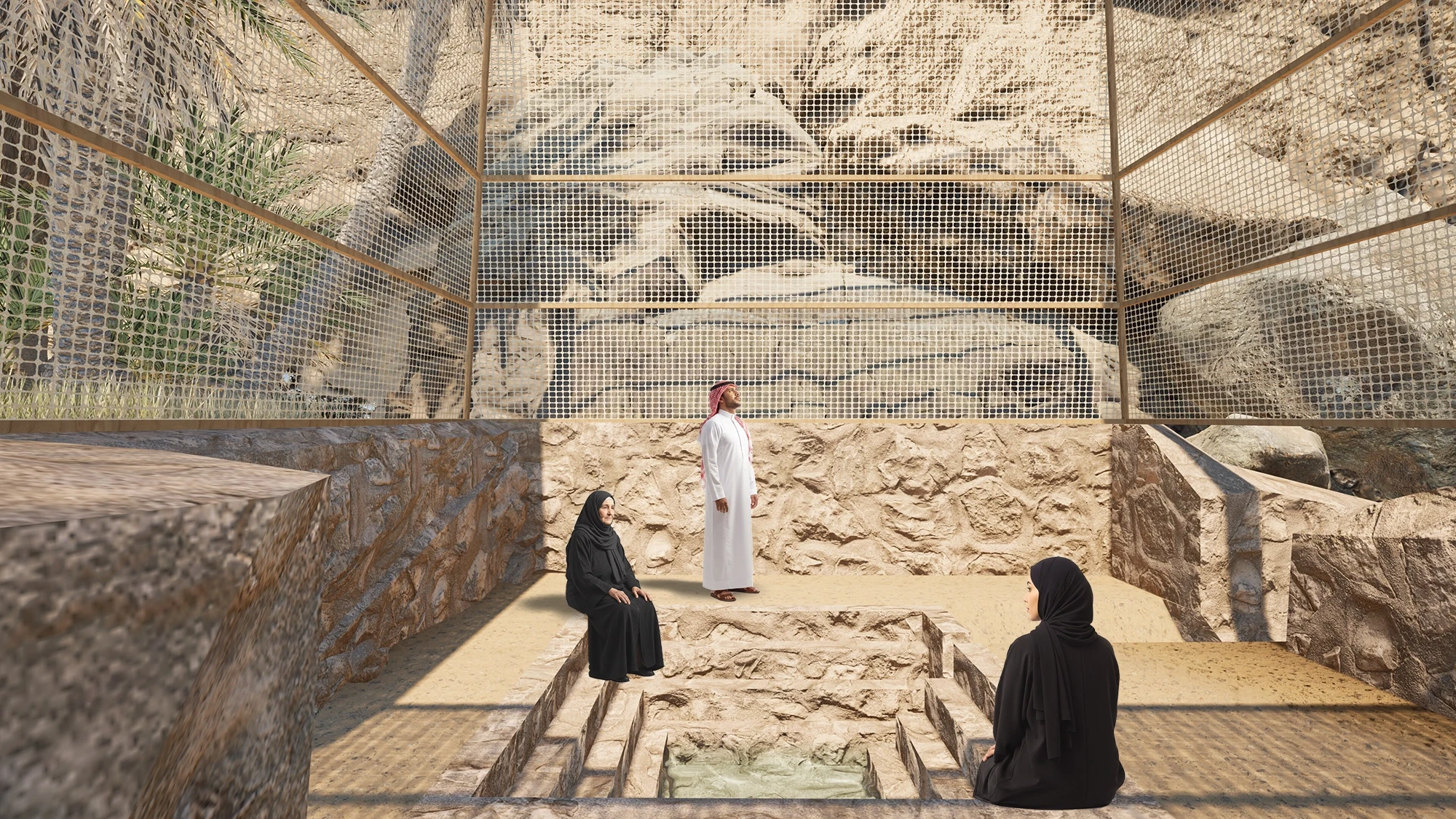
The Musalla of Belonging emerges from the spatial logic of the ancient artificial water basin located within the oasis. Although originally conceived as hydraulic infrastructure, the basin’s stepped configuration has gradually transformed it into a place of gathering, where the local community sits and meets. The project adopts the geometry suggested by this artifact as its generative principle, allowing the architecture to grow directly from an existing spatial and social condition. The musalla is composed of two complementary volumes, each responding to a different mode of inhabitation: contemplation and sociability. The first volume is conceived as a more introverted space dedicated to prayer. Its envelope is formed by a screen of locally sourced stone, assembled to create a dense yet permeable layer that filters light and air while ensuring privacy. The mineral character of the enclosure establishes a quiet and contemplative atmosphere, grounding the space within the material continuity of the landscape. In contrast, the second volume is lighter and more extroverted, conceived as a place for gathering and informal social interaction. Its enclosure consists of a textile membrane, stretched over a structural frame to create a porous and breathable boundary. This soft envelope filters sunlight while maintaining visual and spatial openness toward the basin. Together, the two volumes establish a balance between introspection and community life. By deriving its geometry from the stepped basin and responding to the ways the space is already used, the Musalla of Belonging transforms an ancient infrastructure into a contemporary architectural framework for prayer, gathering, and shared identity within the oasis.
The Musalla of Belonging emerges from the spatial logic of the ancient artificial water basin located within the oasis. Although originally conceived as hydraulic infrastructure, the basin’s stepped configuration has gradually transformed it into a place of gathering, where the local community sits and meets. The project adopts the geometry suggested by this artifact as its generative principle, allowing the architecture to grow directly from an existing spatial and social condition. The musalla is composed of two complementary volumes, each responding to a different mode of inhabitation: contemplation and sociability. The first volume is conceived as a more introverted space dedicated to prayer. Its envelope is formed by a screen of locally sourced stone, assembled to create a dense yet permeable layer that filters light and air while ensuring privacy. The mineral character of the enclosure establishes a quiet and contemplative atmosphere, grounding the space within the material continuity of the landscape. In contrast, the second volume is lighter and more extroverted, conceived as a place for gathering and informal social interaction. Its enclosure consists of a textile membrane, stretched over a structural frame to create a porous and breathable boundary. This soft envelope filters sunlight while maintaining visual and spatial openness toward the basin. Together, the two volumes establish a balance between introspection and community life. By deriving its geometry from the stepped basin and responding to the ways the space is already used, the Musalla of Belonging transforms an ancient infrastructure into a contemporary architectural framework for prayer, gathering, and shared identity within the oasis.

Location
Abha, Aseer, Saudi Arabia
Typology
Community space
Client
ASDA
Area
Year
2025-Ongoing
Status
Design development, 2025-ongoing
Material
Stones, Wood, Textile
Collaboration
Local community

MUSALLA OF BELONGING
MUSALLA OF BELONGING
The Musalla of Belonging emerges from the spatial logic of the ancient artificial water basin located within the oasis. Although originally conceived as hydraulic infrastructure, the basin’s stepped configuration has gradually transformed it into a place of gathering, where the local community sits and meets. The project adopts the geometry suggested by this artifact as its generative principle, allowing the architecture to grow directly from an existing spatial and social condition. The musalla is composed of two complementary volumes, each responding to a different mode of inhabitation: contemplation and sociability. The first volume is conceived as a more introverted space dedicated to prayer. Its envelope is formed by a screen of locally sourced stone, assembled to create a dense yet permeable layer that filters light and air while ensuring privacy. The mineral character of the enclosure establishes a quiet and contemplative atmosphere, grounding the space within the material continuity of the landscape. In contrast, the second volume is lighter and more extroverted, conceived as a place for gathering and informal social interaction. Its enclosure consists of a textile membrane, stretched over a structural frame to create a porous and breathable boundary. This soft envelope filters sunlight while maintaining visual and spatial openness toward the basin. Together, the two volumes establish a balance between introspection and community life. By deriving its geometry from the stepped basin and responding to the ways the space is already used, the Musalla of Belonging transforms an ancient infrastructure into a contemporary architectural framework for prayer, gathering, and shared identity within the oasis.
Location
Abha, Aseer, Saudi Arabia
Typology
Community space
Client
ASDA
Area
Year
2025-Ongoing
Status
Design development, 2025-ongoing
Material
Stones, Wood, Textile
Collaboration
Local community